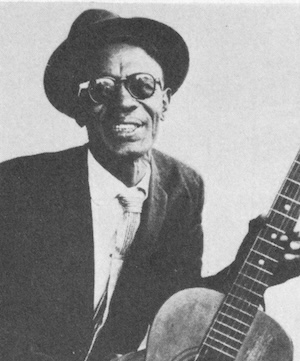
A well-worn guitar rests on a stand at the Institute of Texan Cultures. It may look quiet now, but it once helped tell the stories of Sam “Lightnin’” Hopkins — one of the most important voices in Texas music history.
For African American History Month, the Institute of Texan Cultures highlights Lightnin’ Hopkins, an African American Texan whose music captured everyday life with honesty, humor and heart.
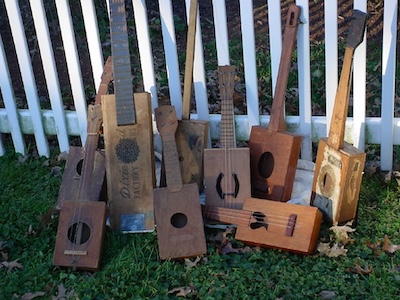
Lightnin’ Hopkins was born Sam Hopkins in 1912 in Centerville, Texas, to a family of sharecroppers. Life was hard and money was scarce, but music was everywhere. As a child, Hopkins built his first guitar from a cigar box and wire. He learned songs from family members and local musicians, picking up stories as much as melodies. In 1920, Hopkins met the man who would mentor him, blues legend Blind Lemon Jefferson. At 8, he joined Jefferson in touring churches and beer joints across Texas.
As a performer, Lightnin’ Hopkins was known for his storytelling. He often made up lyrics on the spot, drawing from his own experiences, which included a stint on the chain gang at the Houston County Prison Farm in the 1930s. His songs talked about love, work, travel and everyday challenges, often with a touch of humor.
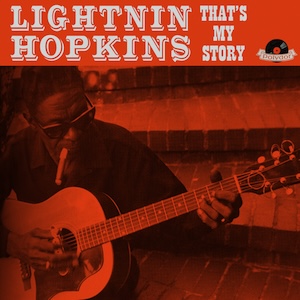
Hopkins began recording in the 1940s and soon became a major figure in the Texas blues scene, especially in Houston’s Third Ward. In 1946, he recorded with pianist Wilson “Thunder” Smith, a session that helped launch his recording career.
In 1949, Hopkins recorded a version of “Tim Moore’s Farm,” based on life at landowner Tom Moore’s farm in Brazos County. Sharecropper Yank Thornton wrote the original verses to the tune, while Mance Lipscomb, a sharecropper at a neighboring farm, added the guitar. The song has grown and changed as performers added to it, and as many as 27 verses are said to exist. “Tim Moore’s Farm” reached No. 13 on Billboard magazine’s Most Played Juke Box Race Records chart.
Hopkins performed everywhere — from front porches and neighborhood gatherings to concert halls around the world. Over his lifetime, he recorded dozens of albums and hundreds of songs, sharing the sound of Texas with audiences far beyond the state. He played Carnegie Hall with Pete Seeger and Joan Baez in 1980. In 2010, Rolling Stone named him one of the 100 Greatest Guitarists of All Time. He influenced musicians including Bob Dylan and ZZ Top.
Lightnin’ Hopkins’ guitar is now part of the Institute of Texan Cultures’ exhibits. It reminds us of a performer who used his voice and songs to connect people across generations and backgrounds.
Visitors to the Institute of Texan Cultures can see Lightnin’ Hopkins’ guitar up close and explore the discovery station to learn more about his life and music. Families can listen to his recordings and hear how his songs bring Texas history to life — one story at a time.
UT San Antonio Libraries music librarian William Glenn created a Spotify playlist to highlight Texas Blues born out of sharecropping.