What began as a simple chrysanthemum corsage for a high school homecoming dance has evolved into something much bigger in Texas: a bold, intricate, and deeply personal tradition. Today’s homecoming “mum” is a full-body adornment of ribbons, trinkets, lights, and keepsakes—part craft, part storytelling, and entirely Texan.
At the heart of this tradition is something even more powerful: a women-led cultural and economic force.
“Mumentous: The Upsizing of a Texas Tradition,” now on view at the Institute of Texan Cultures, explores how homecoming mums grew from modest floral gifts into a statewide phenomenon. The exhibit originated from the work of photographer and author Amy J. Schultz, whose curiosity about her adopted home state led her to document the people—and especially the women—behind the tradition.

“My point of entry was the mum-making side and the community-building side,” Schultz said. “It was a group of women around a table, hot-gluing mums and cutting ribbons. I was new to Texas, and that was my first feeling of belonging—this shared purpose, raising money and supporting kids.”
That first encounter opened the door to a much larger world. Schultz began photographing and collecting oral histories from families, students, educators, and—critically—the makers themselves. What she discovered was a vast, interconnected network of creators, most of them women, sustaining both the tradition and a thriving cottage industry.
“There are thousands of people, mostly women, who work in the homecoming mum sector,” Schultz said. “They are talented handcrafters and savvy business owners. Thanks in large part to their efforts, I estimate the economic impact of homecoming mums to be a half-billion dollars every year.”
That economic impact is driven not by large corporations, but by small, often home-based businesses—many run by mothers, grandmothers, and community members who turned a tradition into an enterprise.
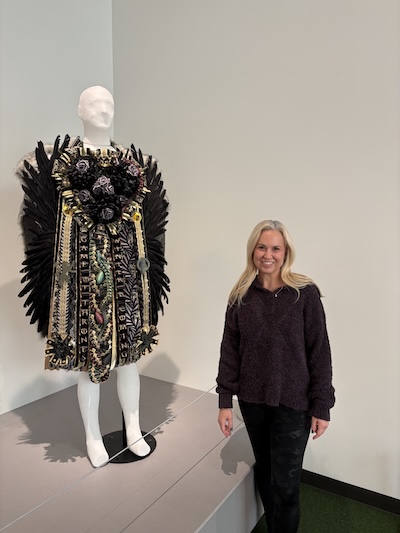
Kara Palmer is one of them.
Palmer began making mums on a small scale—just five in her first year—for her son’s step-sisters and a few interested parents. But demand quickly grew. Within a year, her business expanded by 600%, fueled by word-of-mouth, social media, and her own passion for the craft.
“There is a homecoming mum-making community out there,” Palmer said. “There are workshops, camps, videos—people are constantly sharing ideas. It’s a really giving community.”
That spirit of generosity mirrors what Schultz observed in her research: a tradition rooted in care, connection, and creativity. Whether through parent booster clubs fundraising for school programs or independent makers building small businesses, women are the backbone of the mum world.
Palmer says the most rewarding part isn’t the growth—it’s the reactions.
“I get thrilled when they come pick it up and I see the excitement on their faces,” she said. “One of the best videos I got was from a mom who surprised her daughter by hanging the mum on the door. Seeing her reaction—that’s why I do this.”
For many makers, the work is deeply personal. Each mum is customized to reflect the student wearing it—their interests, achievements, and relationships. In that sense, every creation becomes a wearable archive of memory and identity. Sometimes, that meaning lasts well beyond a single homecoming.
“I wondered why a customer didn’t order from me the next year,” Palmer said. “But then I saw them at the game wearing the mum I made the year before. That was a huge compliment—that it held up, and that it still meant something.”
Schultz saw this same emotional thread across Texas: women using their creativity not just to build elaborate designs, but to strengthen bonds within families and communities.
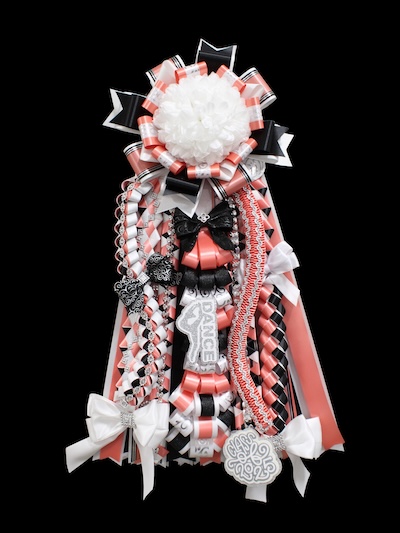
“D-I-Y-ers got involved, and most of those were moms, grandmas, or aunts,” Schultz said. “At the center of the story is always women who love their kids and love their community.”
That love—and the labor behind it—has transformed a once-simple gesture into a defining cultural symbol. From craft tables to online storefronts, from school fundraisers to professional workshops, women continue to shape and sustain the tradition.
During Women’s History Month, the story of homecoming mums offers a vivid example of how women preserve culture, foster community, and drive economic impact—all at once.
Schultz will be joining ITC's Head Curator Bianca Alvarez and Exhibits Coordinator Cristina Winston for a lively panel discussion entitled, “Mum’s the Word: A Conversation with Amy Schultz,” Saturday, March 28, 11 a.m. – noon at the Institute of Texan Cultures, 111 W. Houston St. (at Camaron Street). Afterwards, signed copy of her book MUMENTOUS will be available for purchase. The panel discussion is free with regular museum admission. Seating is limited and ticket purchase is required.