Every artifact displayed in a museum represents trust and confidence. These items are more than historical objects; they are vessels of memory, identity and lived experience. When individuals choose to share their family treasures with a museum, they entrust the institution with preserving the artifact and the stories it represents.
People come first.
Bianca Alvarez, the head curator at the Institute of Texan Cultures, understands the museum’s responsibilities in caring for artifacts and presenting them so as to honor those who used the items in everyday life. In the context of "Puro Conjunto: Border(less) Sound", the ITC exhibit which opened in June, building relationships and establishing trust was the key to opening doors with families and institutions.
“It’s all very personal,” Alvarez said, discussing the process for preparing the new "Puro Conjunto" exhibit at the institute. “The exhibit itself, thinking about our mission, thinking about sharing the stories that make, that have made, and continue to shape Texas – those stories are held by people. So it all comes from a very personal space, and in a way, it just takes one person to connect you to another person to continue with this trail of breadcrumbs that you have to follow to end up with an exhibit like Puro Conjunto.”
Alvarez detailed the process of building community connections as "Puro Conjunto" took shape and she began to envision the artifacts required to tell this story of Texas music. Rather than ask through a cold call, she found a staff member at the Texas Music Museum in Austin who had a previous relationship with the ITC, then she made the trip to Austin personally to view the museum and its collections, arriving at a wish list after spending a day collaborating and sharing a vision for the new exhibit.
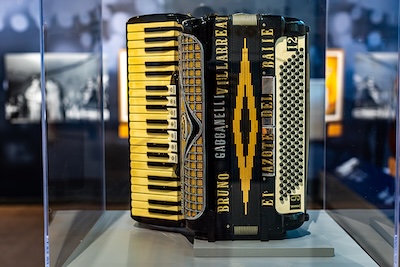
“By the end of the day, Dr. Shorkey was asking what I thought about including an accordion belonging to Bruno Villarreal, which they had never loaned to any other organization,” Alvarez said. “What I've found is that people really want to share. They want to share their stories. They want to share their knowledge. They want to share their priceless objects as well.”
Commitment to Excellence
“When we design exhibits, we’re creating an experience,” Alvarez said. “There are some artifacts that need to be preserved and protected and then there are designated demonstration items we want people to pick up and take into their own hands. There’s something special about connecting with culture in that way.”
The Exhibits team considered each object with regard to environmental conditions like exposure to light, moisture and humidity levels, and temperature of the space. This would determine how certain items were handled, installed or displayed. Certain items would require cases for security or preservation. But in other instances, the institute was determined to connect visitors to cultural heritage through direct experiences.
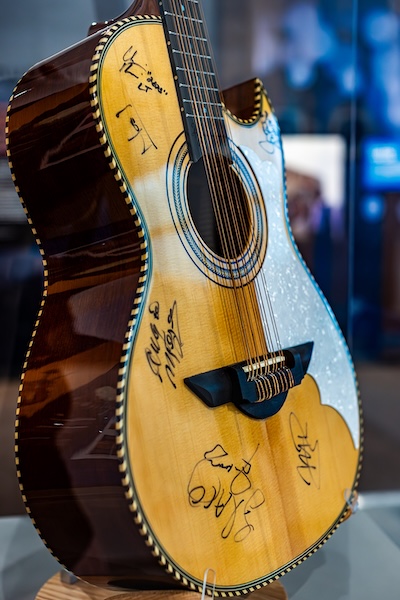
For "Puro Conjunto", the team included three demonstration items: a hand drum, a concertina accordion and a mandolin. The designers wanted museum guests to experience and handle instruments, or representations of them, involved in playing conjunto music.
Learning Experiences, Real Impact
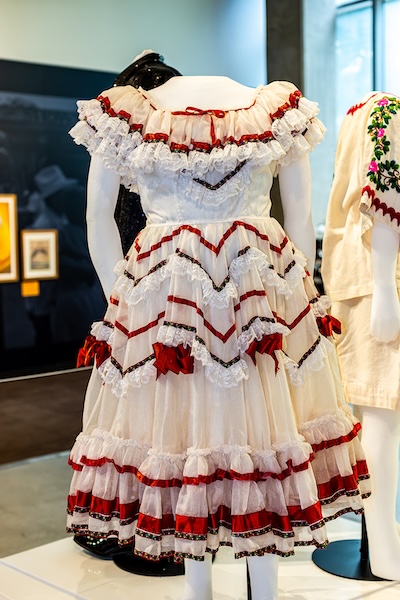
"Puro Conjunto" has also created unique experiences for the institute’s curatorial interns. For students pursuing art history and preservation, library studies, and similar fields, artifact handling, condition reporting and exhibit building provide invaluable experience. St. Mary’s University student Nate Liveris was the institute’s curatorial intern last semester. In addition to research for the conjunto exhibit, he also worked closely in Collections.
“There’s a lot of trust there too,” Alvarez said. “Our interns are being trained in the field and then they’re learning by doing. Their work has a real impact on what we do. Yes, they’re gaining hands on experience, and at the same time, they’re also building relationships they can use toward becoming museum professionals.”
"Puro Conjunto" tells the story of the soundtrack of South Texas, but the exhibit itself is also the result of countless relationships. From families sharing cherished heirlooms to museum professionals carefully preserving and presenting them, every artifact reflects a chain of trust. That trust allows the Institute of Texan Cultures to do more than display objects—it allows the museum to preserve the experiences, memories and stories that continue to shape Texas for future generations.