
Earlier this month, I presented at a summer literacy mini conference with Marissa , Muñoz Ph.D., my colleague in the UT San Antonio College of Education and Human Development (COEHD). Our session highlighted a semester-long collaboration between COEHD and the Institute of Texan Cultures (ITC).
Our presentation detailed the years of discussion and planning that led to a semester-long partnership. But more important, it reflected a shared interest in museum education, object-based learning, and collaboration that helps future teachers see museums like the ITC as trusted curriculum partners.
The Museum as a Classroom
When the Institute reopened in January 2026, I found myself re-evaluating the role museums play in learning today. With a newly relocated museum, changing exhibits, evolving audiences, and the rapid emergence of AI in education, it felt like the right time to reassess our educational mission and the role of outreach in helping visitors engage with exhibits.
Several priorities emerged. We wanted to expand curriculum resources available through the UT San Antonio Runner Research Press platform, develop new content for the Texkit museum-in-a-box program, increase engagement with ITC's demonstration collection, and continue demonstrating the value of museums as resources for object-based learning. We also wanted more UT San Antonio students to see the museum as both a university resource and a professional resource they could return to throughout their careers.
Prof. Muñoz was among the first people I met after joining ITC in 2021. With her background in museum education, she was interested in collaborating on the Texkit program. Over the years, we stayed in touch and often discussed how Texkits could extend the museum experience into classrooms.
Building Texkits Through Partnership
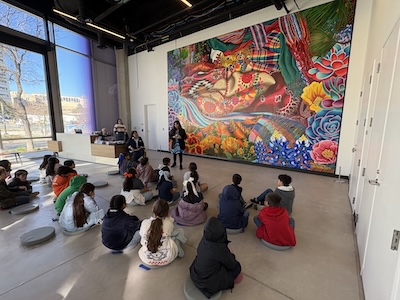
As preparations for the museum's reopening continued, I focused on developing curriculum connected to the semi-permanent exhibition, “Common Threads.” The resulting series, “Explore the Lone Star,” invites students and educators to engage with exhibit artifacts and multimedia through an interdisciplinary, object-based approach. Each Texkit combines lesson plans, multimedia resources, project ideas, and field trip activities designed to help students connect with exhibit themes.
Texkits include hands-on demonstration artifacts, primary sources, multimedia resources, and classroom activities tied directly to content on the exhibit floor. In Fall 2025, I piloted the first kit in the series, “From Field to Fabric.” The experience showed how artifacts, activities, videos, and exhibits can work together to support different learning styles.
At the same time, Prof. Muñoz was redesigning portions of the middle school teaching track for her spring course, “Interdisciplinary Project-Based Learning.” The course helps future teachers learn interdisciplinary instruction by participating in hands-on projects and then designing similar experiences for middle school students.
Together, we explored how the course could incorporate the museum as a local educational resource. We wanted students to experience the museum firsthand and view museums as long-term partners in teaching and learning.
The semester began with an introduction to project-based learning and informal learning environments, followed by readings that included Thomas Kador's “Learning With Things: An Introduction to Object-Based Learning.” The following week, students visited the Institute of Texan Cultures, where we explored the thematic areas in “Common Threads” and the rotating-gallery exhibition “Mumentous: The Upsizing of a Texas Tradition.”
Students participated in a gallery scavenger hunt that sparked conversations about observation, interpretation, identity, and the language middle school students can use to communicate what they see. They also worked with objects from the ITC demonstration collection, selecting items and considering how they might support curriculum development.
Preparing Future Teachers Through Object-Based Learning
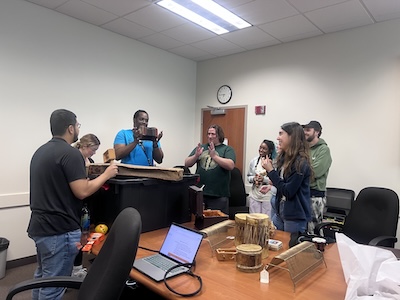
The first project centered on music. Because the curatorial team was preparing a future music-related exhibition, students were encouraged to consider how musical artifacts and instruments could support interdisciplinary teaching.
Over the following weeks, students worked in teams to develop their projects. I visited their classroom to observe presentations and provide feedback. Working in two groups, they created music-themed Texkits, carefully selecting artifacts and designing lesson plans that connected museum objects to classroom learning. Their work demonstrated how museum collections can become meaningful entry points into curriculum design.
Later in the semester, I joined the class for a visit to The DoSeum. The visit provided an opportunity to compare different museum learning environments and examine how exhibits and interpretive materials change for different audiences.
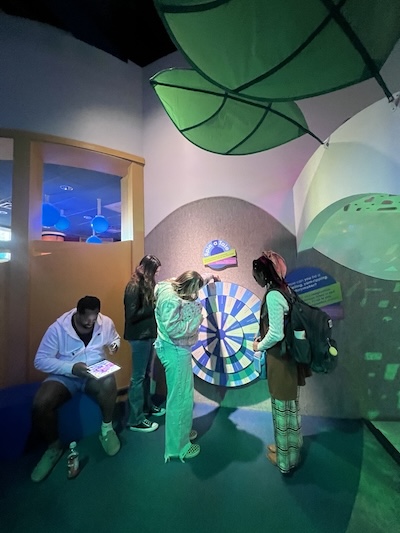
Students met with members of The DoSeum's education team, learned about exhibit-development strategies, and discussed career pathways in museum education. The experience broadened their understanding of the many ways museums support learning.
The second half of the semester introduced a new challenge. After creating music Texkits, students shifted their focus to dance and digital objects. Instead of working primarily with physical artifacts, they explored how digitized photographs, archival materials, oral histories, videos, and other digital resources could function as educational objects.
Students read selections from Haidy Geismar's “Museum Object Lessons for the Digital Age” and examined questions surrounding access, interpretation, and digital engagement. I joined one class virtually to demonstrate how educators can locate, evaluate, and use digital resources in classroom instruction.
When the class returned to ITC, students viewed exhibits through a different lens. They examined how multimedia and digital tools support interpretation and explored connections between dance, movement, digital collections, and the stories presented throughout the museum.
By the end of the semester, students were refining their dance Texkits while exploring ideas related to whole-human learning and community-centered curriculum. Along the way, they gained firsthand experience using local cultural institutions as educational partners and developing interdisciplinary curriculum grounded in real objects, places, and communities.
A New School Year
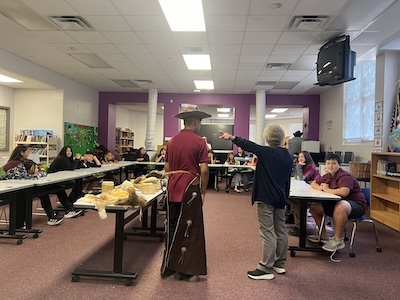
As educators and students begin another school year, this partnership with Prof. Muñoz serves as a reminder that learning can happen far beyond classroom walls. Together, we introduced a new generation of teachers to museums as trusted partners in teaching and learning.
Thanks to our UT San Antonio students, the museum will begin the 2026-2027 school year with a new music-themed Texkit, expanded curriculum resources, meaningful opportunities for engaging with museum collections, and a dance-themed Texkit on track for spring 2027.
For the Institute of Texan Cultures, working with university classes advanced our efforts to connect exhibits, collections, and outreach in ways that support student learning. For students, the experience demonstrated how museums can enrich curriculum, foster inquiry, and help learners connect with the stories, objects, and communities that surround them every day.